Malawi Electoral Commission (MEC) has launched the 60-day official campaign for the September 16 General Election with a call for candidates and political parties to adhere to the code of conduct and focus on issues.
During the launch at Bingu International Convention Centre in Lilongwe yesterday, MEC chairperson Annabel Mtalimanja said political parties and candidates must present to the electorate the substance of their manifestos and aspirations and not focus on personalised attacks, castigations and promotion of hate speech.

She emphasised that during the campaign period, running from July 14 to September 14 at 6am, all contesting candidates and political parties are free to openly promote themselves to the electorate in their targeted electoral areas and across the country.
Mtalimanja, a judge of the High Court of Malawi, said: “The commission hereby charges you to assure a campaign environment that is grounded in dignity, respect and civility.
“This is now the era for political campaign programmes focused on the politics of ideas, accountability, and public service. The era when campaign periods were used as a licence to promote politics of tribalism, personal attacks, harass, humiliate, slander, or to incite violence against opponents must be behind us.”
Citing Section 55 of the Presidential, Parliamentary and Local Government Elections Act, she said the law has given MEC powers to mete out penalties for violating the Code of Conduct for Campaign.
The cited law states that a political party or person who contravenes the code of conduct shall be liable to a penalty of K5 million payable to MEC. It also gives powers to the commission to disqualify a political party or candidate in breach of the code from participating in the election.
Turning to the elections process, Mtalimanja reiterated that vote counting will be done at individual polling stations, after which the results will be transported physically to constituency tally centres for aggregation.
“Results transmission will primarily be physical and the same results will be uploaded into the system and transmitted electronically to the main tally centre,” she said, adding that MEC will conduct dry runs to test all electoral systems ahead of the polls.
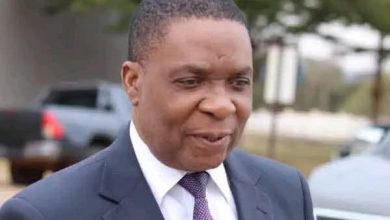
Taking his turn, Registrar of Political Parties Kizito Tenthani warned that parties that will break election campaign rules will face punishment, stressing that the Code of Conduct for political parties is now backed by law.
He cited examples of actions that could lead to legal trouble, including carrying weapons to a rally and making harmful speeches from the podium.
Said Tenthani: “Bouncers wearing police uniforms are prohibited. Let us not remove each other’s campaign materials. Let us not organise rallies close to each other to avoid clashes. Mass-booking of venues to stop rivals is also prohibited.”
He said other key restrictions include campaigning at funerals and churches.
Tenthani also said parties must inform the district commissioner or police before organising any rally.
On his part, Deputy Inspector General of Police Noel Kayira urged all police officers to remain neutral and give equal treatment to everyone to ensure a smooth and violence-free campaign.
He specifically told all officers-in-charge (OCs) nationwide to uphold the law and ensure everyone gets security.
“It won’t be proper for parties to be calling the IG to ask to hold a rally. OCs give equal treatment to everyone. Let us maintain political neutrality,” said Kayira.
He also said police have already done an assessment to find high-risk areas, which include Karonga Boma, Lilongwe and Mponela, among others.
Reacting to the launch, political analyst George Chaima expressed scepticism, citing past failures to enforce election laws.
He said: “All past elections have had laws and policies which need to be observed and respected. We have seen several incidents whereby law makers and those in positions of authority being the first to break the law. Our police too have joined the bandwagon of politicians by forgetting their professionalism.”
Another analyst, Gift Sambo from the University of Malawi pointed out that the perception out there is that the police are always biased towards ruling parties when handling electoral matters.
He, therefore, said this campaign period offers the police the rare opportunity to demonstrate to all stakeholders that it is a reformed institution capable of operating within the dictates of the liberal democratic constitution.
In her speech yesterday, Mtalimanja urged the police and other security agencies to reinforce public confidence by acting with due professionalism.
She also acknowledged the important role the media plays in elections, urging all media institutions not be biased for or against any political party and candidate.
“The Malawi Communications Regulatory Authority has resuscitated the Election Broadcasting, Monitoring and Complaints Committee to handle complaints against broadcasters that are election-related. All stakeholders are, therefore, encouraged to lodge their complaints against the conduct of broadcasters through this Committee,” said Mtalimanja.
According to MEC, over 118 civil society organisations (CSOs) and civic and voter education (CVE) service providers have been accredited and oriented on their expected role and developed a code of conduct for uniformity in the delivery of the service.
In an interview, Malawi Congress Party (MCP) secretary general Richard Chimwendo Banda raised concerns about ambiguity in campaign regulations, specifically regarding transport allowances for party organisers.